How to Choose the Right Road Bollards for Your Project

Road bollards come in a variety of shapes and sizes, and selecting the right type and size can improve safety, maintenance, and project completion. From sourcing bollards for large infrastructure projects to commercial buildings, parking areas, and public works contracts, the choice of bollards is crucial to ensuring a successful and enduring outcome.
When it comes to wholesale road bollards, it includes product quality, materials, adherence to industry standards, flexibility for customization, and the reliability of the supplier. By partnering with a suitable road bollard manufacturer, you can be sure of product quality, competitive pricing, and reliable delivery for projects of any size.
This bollards guide will help you to consider critcal factors when selecting the right road bollards and how your procurement process will benefit from sourcing from a trusted wholesale supplier to maximize value, streamline procurement, and guarantee project success.
What Are Road Bollards?
Road bollards are vertical posts that are firmly placed into the ground to provide guidance, enhance road safety, and prevent vehicles from accessing the road without permission or by accident, which could endanger pedestrians, roads, and infrastructure. These are typically utilized on roads, highways, parking lots, businesses, industrial complexes, airports, ports and public areas to demarcate traffic flow and provide site security.
A range of designs and materials is available to accommodate different traffic management, safety and security needs. It depends on the type of project that you have, its traffic flow, impact resistance, environment, maintenance and access control needs.
Step 1: Define Your Project Requirements
When choosing road bollards, it is important to consider your project's needs. Each installation will have varying safety, traffic control and security goals, so it is important to know the application so you can select the appropriate bollard type, material and design. So, before installing road bollards, make sure to identify their purpose.
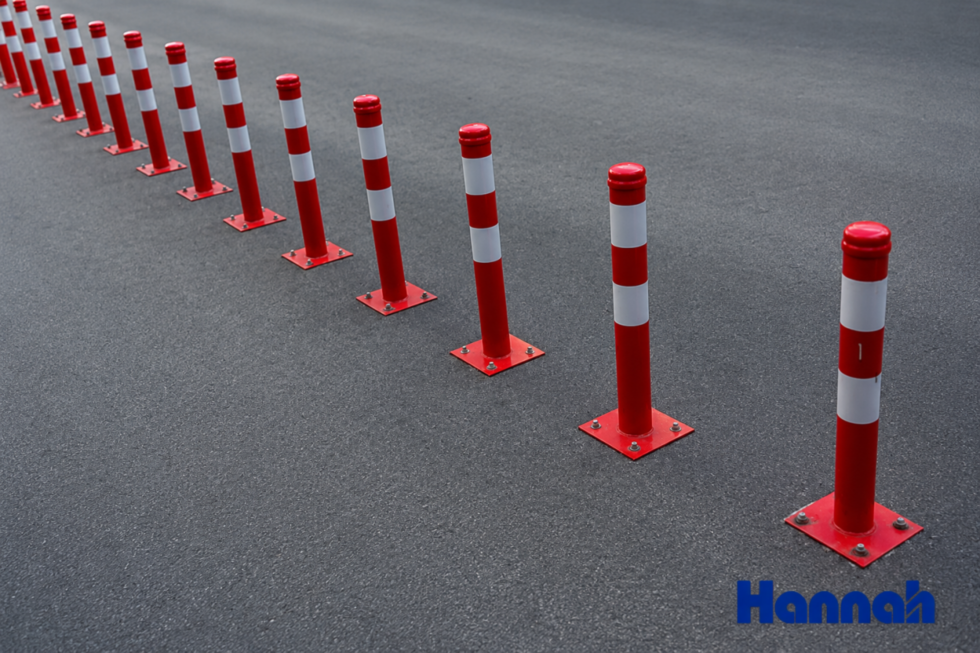
Bollards can be used to delineate traffic lanes and provide a guide for road movement, to keep vehicles out of unauthorized areas, to protect pedestrians, or to help secure important infrastructure. Flexible bollards are suitable for lane delineation and traffic guidance, while fixed or crash-rated bollards are best suited for high security applications. The main intention should be clearly stated, which helps to eliminate options and maximise performance.
Step 2: Choose the Right Type of Road Bollard
Fixed Road Bollards
Fixed road bollards are permanently installed and offer a constant measure of protection from unauthorized vehicle access. They can generally be found on roadways, sidewalks, commercial structures, industrial sites, warehouses, and public works projects where there is permanent traffic control. They are generally made from galvanized steel, stainless steel, cast iron, or reinforced concrete to ensure maximum durability and impact resistance.
Distinctive Removable Road Bollards
Removable bollards are locked in for security but can be unlocked and taken away when necessary for vehicle access. They are suitable for areas that need to be accessed occasionally for emergency vehicles, deliveries, maintenance, or special events. These bollards are typically constructed from galvanized steel, stainless steel, powder-coated steel or aluminum to provide a durable, corrosion-resistant and portable option.
Retractable (Telescopic) Bollards
Retractable Bollards can be extended to allow retracted to block access. There are manual, semi-automatic and automatic models, and they are popular in hotels, airports, government buildings, office complexes and secure parking facilities in different colours. The majority of retractable bollards are made of stainless steel, galvanized steel or carbon steel that are designed to hold up to heavy usage and exposure to the elements.
Flexible Road Bollards
Flexible bollards bend when hit by a vehicle, and then spring back into shape. They offer better lane guidance as well as minimize vehicle damage, which makes them suitable for highways, parking lots, bike lanes and traffic islands. They are mainly made from Polyurethane (PU), thermoplastic polyurethane (TPU), flexible polyethylene (PE) or other high impact polymers, which provide good flexibility and weather resistance.
Decorative Bollards Shape
Decorative bollards serve both a functional purpose and an aesthetic one - they can be used as a traffic control device or as a part of a park design, shopping malls, hotels, schools, and urban developments. They are typically made from cast iron, stainless steel, aluminum, decorative concrete, or powder-coated steel, ensuring they will match the style of architecture they are intended for and yet remain durable.
High-Security Crash-Rated Bollards
Crash-rated bollards are designed to resist the impact of a vehicle at high speeds and to protect critical infrastructure. They are extensively deployed in government offices, embassies, airports, military bases, power plants, and data centers. Usually, these bollards are made of reinforced carbon steel, heavy-duty galvanized steel, stainless steel reinforced core, and concrete-filled steel that provide certified impact resistance and maximum security.
Step 3: Select the Best Bollard Material
Road bollards can be made from steel, stainless steel, plastic, rubber, polyurethane or concrete and are intended to handle various road traffic and weather scenarios. They can be fixed, removable, retractable or flexible, and can have different levels of impact resistance and access control depending on the application.
There is a significant influence on the choice of bollard with the installation location. Take into account traffic levels, vehicle speed, weather, moisture or chemical exposure and the nature of the surface upon which the bollards will be set. In areas where water, wind, and weather are a significant concern, materials like stainless steel or galvanized steel may be necessary to prevent corrosion.
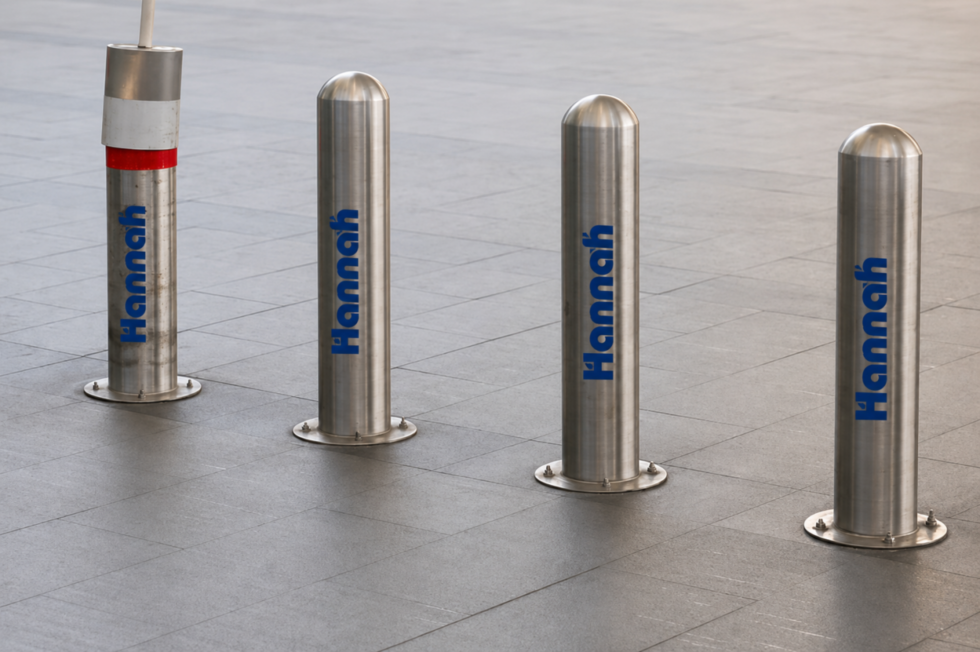
Likewise, if the road is heavily used, it might need sturdy bollards that can withstand impacts from vehicles and people, and if the area is designed for parking or to accommodate pedestrians, it might be better to use soft or decorative bollards that are less likely to damage the road or injure people.
Step 4: Choose the Right Installation Method
How bollards are installed and bollard designs can affect their stability, security and service life. The correct type of installation will depend on the protection required, conditions at the site, maintenance requirements and the need for permanent or temporary access to the site for vehicles.
1. Surface-Mounted Warning Bollards
Surface-mounted bollards are placed on top of existing concrete or asphalt with anchor bolts, and are easy and inexpensive to install. They should be used for low to medium impact applications where excavation is not feasible, like parking lots, pedestrian walkways, commercial entrances, and retail facilities.
2. Embedded (In-Ground) Bollards
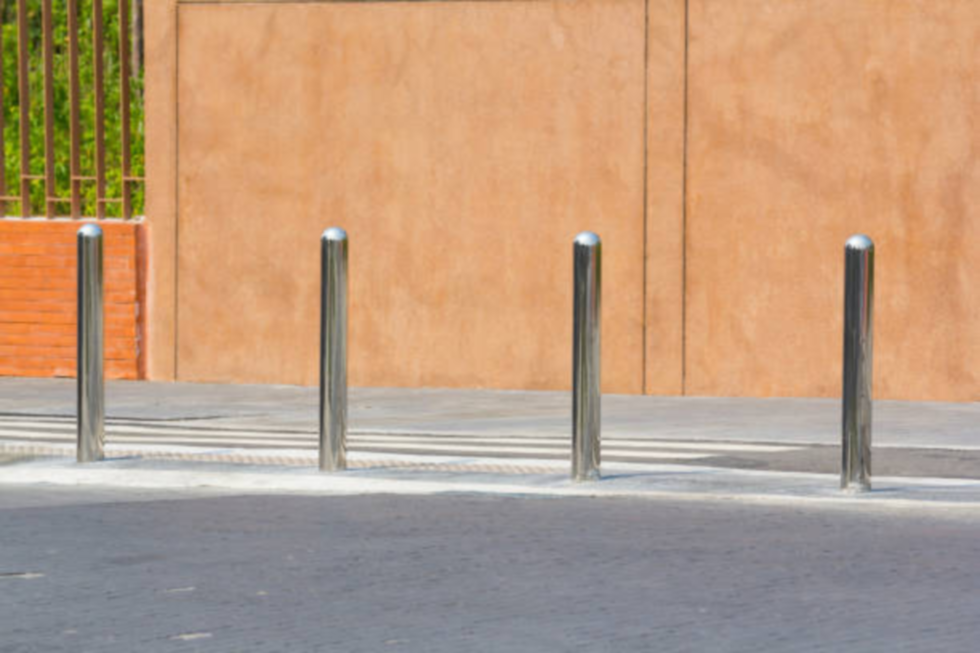
Embedded bollards are those that have substantial portions of the bollard buried in the ground and reinforced with concrete bases. This installation method offers excellent strength and impact resistance for highways, industrial properties, public facilities, government facilities, and high-security areas.
3. Removable Systems
Removable bollard systems enable authorized individuals to remove or reinstall bollards as needed when vehicles are accessing the area. They are ideal for private roads, event sites, emergency access, loading areas and commercial properties where flexible traffic control is required; they provide a great security and access balance.
Step 5: Consider Local Standards and Regulations
When buying road bollards, make sure they meet local traffic and safety laws, and are built to local building codes. If more stringent security is needed, make sure the bollards comply with the applicable impact or crash test criteria and with any municipal or industry-specific standards. By working with a reliable supplier, it is more likely that they will be able to ensure compliance and prevent potential project delays.
Step 6: Calculate Your Budget When Using Bollards
Cost shouldn't be the sole factor, because the cheapest bollards may not be the most cost-effective in the long-term. Calculate TCO (total cost of ownership) incorporating material quality, installation, maintenance, durability and similar bollards replacement costs. High-quality, reliable road bollard manufacturers can offer superior long-term performance and lower lifecycle costs.
Bollard Cost Breakdown
| Cost Factor | Lower Cost Option | Higher Cost Option | Impact on Price |
| Bollard Type | Fixed or surface-mounted bollards | Crash-rated, retractable, or customized bollards | Advanced security features and engineering increase costs. |
| Material | Plastic, polyurethane, or standard steel | Stainless steel, galvanized steel, reinforced steel | Premium materials offer greater durability, corrosion resistance, and impact protection. |
| Installation Method | Surface-mounted | Embedded (in-ground) or retractable systems | Excavation, concrete foundations, and automation increase installation expenses. |
| Finish & Features | Standard finish | Powder coating, reflective bands, custom colors, decorative designs | Custom finishes improve visibility, appearance, and weather resistance. |
| Order Quantity | Small orders | Bulk wholesale orders | Larger orders typically reduce the cost per unit through volume pricing. |
| Customization | Standard models | OEM/ODM designs, custom sizes, branding | Custom specifications increase manufacturing costs but better meet project requirements. |
Tip: While premium bollards require a higher initial investment, they often provide lower maintenance costs, longer service life, and better protection, making them a more cost-effective solution over the long term.
Common Procurement Mistakes
- Choosing based only on price
- Ignoring compliance requirements
- Not considering maintenance costs
- Buying from inexperienced suppliers
- Overlooking logistics and delivery schedules
- Failing to verify product certifications
Hannah Technology: Reliable Road Bollard Supplier
We produce and provide premium road bollards for all kinds of traffic management and security requirements at Hannah. We're trusted by contractors, distributors, municipalities and infrastructure developers for airport and stadium use, at universities, hospitals, parking facilities, government buildings, commercial buildings, industrial sites and entertainment venues.
From marker bollards to strip bollards needed for public events to long-term solutions for securing busy storefronts, roads, and critical infrastructure, Hannah Technology has solutions to fit the needs of any project. From fixed bollards to customizable (OEM/ODM) ones, removable, retractable, decorative, and high-security, we have all and can supply projects of any size with competitive wholesale pricing and reliable worldwide delivery.
Conclusion
Some of the factors you'll need to consider when selecting the right road bollards include safety goals, installation conditions, materials, installation process, regulatory requirements, and budget. These variables can be used to choose bollards that provide dependable traffic control, durability, and performance to meet the demands of your application.
From town and city buildings to commercial buildings, industrial sites to mega-building projects, working with a trusted bollard manufacturer guarantees you quality, competitiveness, and reliability.
Ready to Source High-Quality Road Bollards?
Hannah's complete wholesale selection of road bollards includes fixed, removable, retractable, flexible, decorative and high-security bollards. OEM/ODM customization, strict quality control, and global supply are features that allow us to help distributors, contractors, and project buyers find the right traffic safety solution for each application.
Call Hannah Technology today to talk about what you need, get a quote, or learn more about the full range of road bollards for your next project.
Frequently Asked Questions (FAQs)
Which road bollard is best for parking lots?
Steel bollards offer a useful method for guiding traffic, safeguarding pedestrians and reducing damage to vehicles in parking lots. Flexible or surface-mounted steel bollards with a reflector pattern are suitable for parking lots for traffic guidance, pedestrian protection and vehicle protection.
What is the standard spacing between road bollards?
The distance between road bollards is normally a range from 1.2 to 1.8 meters (4 to 6 feet) apart, depending on the pedestrian intersection access requirements, traffic flow, and local regulations.
Can road bollards be customized for government projects?
Yes. Bollards can be tailored to fit distinct government requirements, from rectangular to circular size and black and white to gray color, to security ratings and compliance.
How long do road bollards last?
Quality road bollards have service lives of 10–30 years or longer, depending on the bollard material, environment, and maintenance.
Can road bollards be customized? Are OEM and private-label services available?
Yes. Hanna offers OEM and private-label bollard services, including product specifications, packaging, logos, materials, and sizes for wholesale and government projects.